




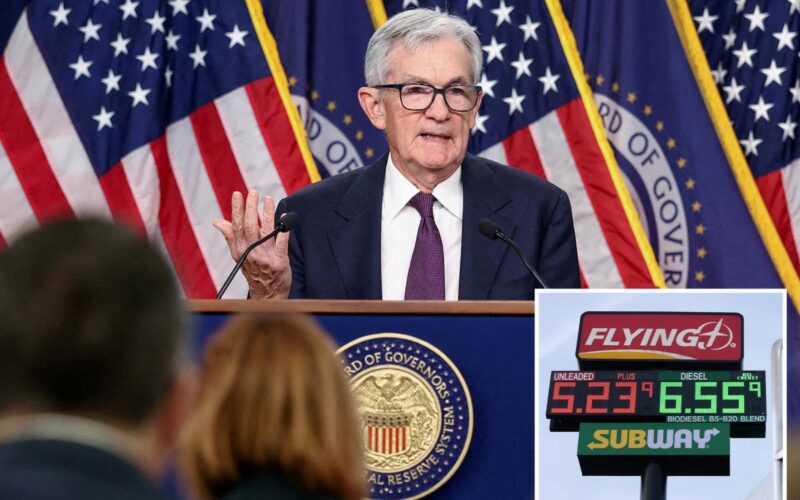
Federal Reserve officials stuck to their projection of one interest-rate cut this year at their meeting in March despite uncertainty around the war in Iran – and the odds of at least one cut tripled Wednesday following the start of a two-week cease-fire in the conflict.
At the March 17-18 meeting, just a few weeks after the US and Israel launched strikes on Iran, most policymakers said the conflict could result in the need for lower rates, according to minutes released Wednesday.
Central bankers said they would need to remain “nimble” as they waited to see how the war hits inflation, which is stubbornly above the Fed’s 2% goal, and the labor market, which created virtually no jobs last year. US employers added 178,000 jobs in March, though those surveys were completed in the early days of the US and Israel’s war with Iran.
“Many participants judged that, in time, it would likely become appropriate to lower the target range for the federal funds rate if inflation were to decline in line with their expectations,” the Fed minutes read.
The meeting summary also noted a possible “further softening in labor market conditions, which could warrant additional rate cuts, as substantially higher oil prices could reduce households’ purchasing power, tighten financial conditions, and reduce growth abroad.”
Economists have warned that Iran’s blockade of the Strait of Hormuz, which has caused the worst-ever energy supply disruption, could reheat inflation – potentially keeping the Fed from lowering rates.
Federal Reserve Chair Jerome Powell recently said he sees no need for a rate hike yet.

Following President Trump’s Tuesday announcement of a two-week cease-fire with Iran, contingent on the reopening of the strait, investors ramped up their bets that Fed officials would lower rates this year.
The odds of at least one rate cut by December jumped to 43% on Wednesday – a huge jump from just 14% the previous day, according to CME FedWatch, which tracks 30-day Fed Funds futures.
It’s just the latest shift in outlook after the broad projection earlier this year was for multiple rate cuts. As the war in Iran heated up, traders reversed their predictions – even pricing in odds of a rate hike this year.
Traders have not returned to their view earlier this year for multiple rate cuts as there is still substantial uncertainty around the cease-fire and whether it will last.
Iran’s navy on Wednesday reportedly threatened to attack any ships that attempt to traverse the strait without permission, while analysts warned that it will take months for global energy supplies to normalize even if the waterway is fully opened.