

The midterm elections may hinge on whether Washington is able to fight inflation. While the Federal Reserve gets much of the attention, AI has become a key part of the White House’s strategy to address the affordability crisis.
“The Administration is working to make sure AI delivers real improvements to people’s health, safety, and economic opportunity,” Michael Kratsios, director of the White House Office of Science and Technology Policy, told me.
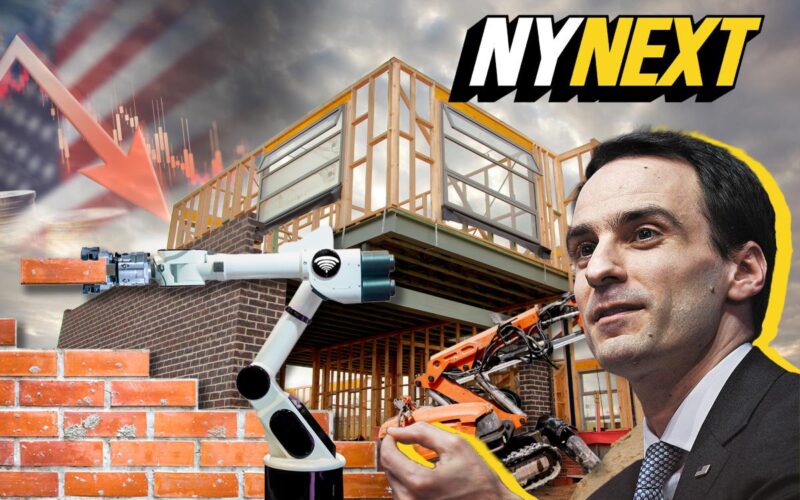
Technological advancements are cutting mortgage costs, slashing the cost of home construction and decreasing the price of transportation and trucking.
“Inflation will fall dramatically because of innovation and robotics,” Stephen Moore, an economist and former Trump advisor, told me. “The history of economics is prices fall with productivity … the AI revolution will make everything more productive.”
Kratsios noted that at CES earlier this week, he “saw firsthand the transformative innovations American companies are developing, from breakthrough medical diagnostics to autonomous vehicles that will save lives on our roads.”
Boston Dynamics showed off its production-ready Electric Atlas robot — a 6’2″ machine that can lift 110 pounds and can work in warehouses or manufacturing.
Nvidia showcased Alpamayo, AI-designed for self-driving trucks that could slash transportation costs through round-the-clock operations and optimized routing.
LG unveiled CLOiD, a wheeled home robot with AI-powered arms that handles laundry and meal prep.
And AC Future showcased its AI Transformer Home series — tiny homes with AI-driven automation for expansion and energy management, starting at $100 deposits with deliveries in late 2026.
“AI is already enabling new levels of productivity and timesaving… we’re on the cusp of really feeling the benefits,” Nathan Leamer, executive director of Build American AI, told me.
Both housing and healthcare — at the center of the affordability debate, eating up 40% of a family’s income on average — could be some of the first industries to see benefits of AI.
Vishal Garg, CEO of Better.com, an AI-powered mortgage lender, said the company’s embrace of new technology has delivered “approximately two rate cuts worth of savings.” Better has reduced the cost of originating a mortgage from about $5,000 per loan to roughly $3,000 over the last two years.
This story is part of NYNext, an indispensable insider insight into the innovations, moonshots and political chess moves that matter most to NYC’s power players (and those who aspire to be).
Moore points to Lightspeed Homes, where he is on the board, as proof the revolution is already underway. The company uses robotics to construct modular housing in a factory, and its first homes are expected to roll out later this year.
“It’s a good example of how we can build a new home 40% to 50% faster and reduce costs by that much,” Moore said.
The company joins a growing field of robotics-enabled housing startups — including United Dwelling, Boxable, Abodu, Connect Homes, Dvele, and Mighty Buildings — that are betting prefabricated, partially automated construction can crack the affordability crisis.
Of course, critics worry that AI-driven efficiency will cost jobs in the short term — potentially displacing workers faster than new opportunities emerge.
But Moore dismisses these concerns.
“The jobs that go away are the jobs that are drudgery,” he told me. “The work we do will be safer and more meaningful.”