




Our incoming mayor is a proud graduate of the Bronx High School of Science and therefore knows a worthy science project when he sees one — especially one that was made in New York, employs New Yorkers, and promises to generate new cures to intractable diseases that threaten New Yorkers.
More than ever, science investment offers one of the surest pathways to good jobs, the enhancement of the city’s pre-eminence as a research center, increased municipal revenue and ultimately improved health for all New Yorkers. The city is fast emerging as a hub for scientific research but still needs government investment to take us to the next level.
Mayor-elect Zohran Mamdani has expressed a keen interest in encouraging mom-and-pop startups. The New York Stem Cell Foundation (NYSCF) was one such story — well, more of a mom-and-mom story — and it helped transform New York into a hub for scientific research.
Our story began when two Manhattan mothers — one of them our late, visionary founder Susan Solomon — gathered around a kitchen table determined to find a way to help their children, who were suffering from Type-1 diabetes. Their determination and generosity inspired a breakthrough idea: use extracted human stem cells to find cures to several long-intractable diseases, not only diabetes, but Alzheimer’s, cancer, Parkinson’s, and MS.
Thanks to recent innovations, stem cells are now obtained from skin scrapings and blood — controversy-free! This breakthrough also meant that NYSCF was able to conduct its research on a diverse group of people, instead of focusing only on white males, as traditional laboratories had long done.
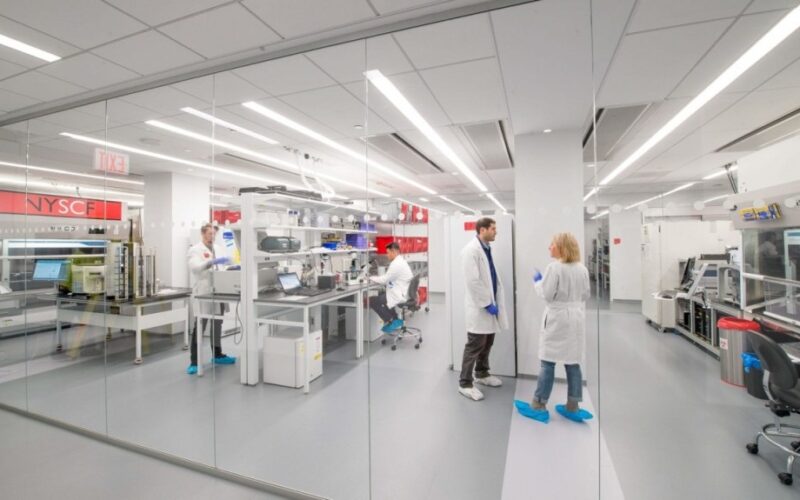
For 20 years, NYSCF scientists made astonishing breakthroughs from its nonprofit, state-of-the-art facilities, for the last decade near the Hudson River on the mid-West Side. Here, our unique robotic platform reproduces stem cells 24/7, deploying precision medicine to apply potential cures to thousands of stem cells at once, at a breathtaking pace. NYSCF scientists have already begun testing a way to arrest, perhaps even reverse, macular degeneration, and additional breakthroughs are on the horizon.
Inevitably, success requires expansion and new capital. A few months ago, it became clear that our program needed to be taken to the next level. It was time to seek involvement from a more established research institute to provide the infrastructure and investment to expand our trials and hasten our amazing results to the market.
Fortunately — for the continuity of the research, our team, and our city — we connected with a powerhouse partner, Jackson Laboratories in Maine, which agreed to an alliance that will enhance our pioneering research. Recognizing the appeal of the New York City ecosphere, JAX has acquired NYSCF and chosen to keep the operation right here in Manhattan, reaffirming the mid-West Side as a center for life-science research.
It is our hope that Mamdani will now encourage further development of this sector, and provide new investment in the neighborhood as a magnet for science and research jobs. This would generate the kind of synergy that is fostered when researchers work in close proximity for the greater good.
As NYSCF begins its latest chapter as the JAX-NYSCF Collaborative, our scientists remain committed to pursuing their vital work without interruption. There will be continued opportunities for student interns from our local schools and young scientists from around the globe who see New York as the mega-center of stem cell research. And, hopefully, the new administration will pursue expanded investment in this research-laboratory community.
As we all know, the federal government has vastly reduced its investment in science. We appreciate the effort Gov. Hochul has made to fill some of the resulting gap by funding cutting-edge research in cell and gene therapies in Buffalo and on Long Island. Hopefully, she will join Mamdani in recognizing Manhattan as another research center worthy of support.
When we built our labs on the West Side, other institutes and industries followed. Our once-obsolete building is now a center for biomedical research. A neighborhood once noted for automobile showrooms has become a hub for life-changing science.
At a time of both health disparity and science skepticism nationwide, the future of scientific research in our city has never been more important — or more limitless. We urge the new mayor to support the life-saving life science industry. With the federal government pulling back, there remains a huge hole to fill — and hopefully New York will fill it.
Raab is the CEO of NYSCF and the former president of Hunter College.