



In the twinkling holiday markets and bonhomie of Midtown’s pedicab Santas, there is something of the summer of 2020 — when we picnicked in Central Park but knew we’d be missing friends come fall. We’ll remember this respite, like sun on our faces.
New York is waiting. Christians prep for a God born in desperation. Jews light improbable candles, slightly brightening each dark night with memory of a defiant miracle. The city is in hope or apprehension for the new mayor.
We look not to Bethlehem or Jerusalem but to Washington, waiting for the king’s mood to shift and the troops to arrive, for the scenes from L.A./Chicago/Charlotte to repeat. In immigrant New York the wait is for the men in green vests barreling down Fulton St. or Canal, Third Ave. or Roosevelt.
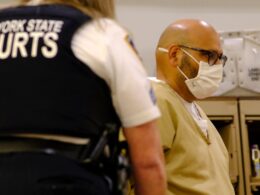
These have been anxious months of tense muscles in the doom-laden court rooms of 26 Federal Plaza or breath held, staring at find-my-friends as husband trundles from train to apartment — safe this time.
Across the city WhatsApp and Signal chats buzz with possible sightings, false alarms and got their too lates. Two men taken here. Three more a few blocks away. Does anyone know their name? Does someone recognize the face? Can we file a habeas petition before the neighbor is hurdled to Texas, Louisiana, El Salvador, Rwanda?
It becomes somehow normal with repetition, an inverse of the magical stories of Maccabees or savior born that we scuff the awe from with retelling. What was unthinkable a year ago: masked men with guns grabbing claimants in U.S. courts, asylees with open cases rendered to foreign countries, workers snatched from the street, no due process — has become routine. A procedure. The city closes up behind them and traffic keeps moving.
The safer weigh what sign will herald that authoritarianism has come. Those with memories of it elsewhere have already reverted to the silences, the sharp eyes. Those getting the brunt of it see clearly.
New York is always full of exiles from authoritarian regimes: Cubans of the 19th century, the European dissidents of the 1930s, the Chileans of the 1970s. Today’s Chinese, Venezuelans, Senegalese are experts at surviving. So are the Indigenous Mexicans who sell flowers on the unfashionable corridors of the boroughs. They’ve been surviving a long time.
New York is preparing. Making its list. Whistles proffered neighbor to neighbor. Protocols hashed out for rapid response teams. Study sessions to be of use at pro se legal clinics. Gathering alien registration numbers of friends. Coaching to remember phone numbers (ICE takes your phone before you get to make a call). Temporary custody forms so the children don’t end up in foster care.
In the midst of this dark December, the preparations and the fear, the Mexicans celebrated, playing mariachi music, the trumpets at high wail, for the ubiquitous Virgin de Guadalupe. Half Indigenous, half Spaniard, she is said to have appeared in 1531 to a peasant named Juan Diego. She filled his cloak with an impossible profusion of roses and emblazoned it with her image.
You’ve seen her, on restaurant menus and tattoos, embroidered on sweatshirts and painted on walls, a protectress and queen, a swaggering symbol of pride and miracle. No blond Madonna of Renaissance art, Guadalupe looks like the people she protects. She didn’t visit the powerful Spaniards in 1531. She came to indigenous Juan Diego, speaking in Nahuatl.
In the darkness after work this month the men of dozens of Catholic parishes built majestic frames for her portrait and pedestals for her statue, workmen with expert hands hoisting the carved wood on their shoulders as their American daughters rehearsed dances to the mestiza Mary.
Many of the fathers had a price on his head — Geo Group gets a per diem from the federal government for each alien they hold in for-profit detention. Third quarter revenue was up 13% over last year. The government pays whether the family’s case was decided by a U.S. court or not, whether they were eligible for appeal, for work permit, whether they had a green card.
Still, the fathers came at night to prepare the church and in thousands of New York kitchens expert hands patted masa into corn husks. Rolled and tied sweetly with bows, a mountain of tamales grew, as numerous as Guadalupe’s roses.
On the night of Dec. 11 in churches from Sunset Park to Soundview, Mexican families sat with the Virgin of Guadalupe all night. She had traveled with them from Puebla, Guerrero and Oaxaca into a city once foreign, now their own. Were they safe in church? Not necessarily.
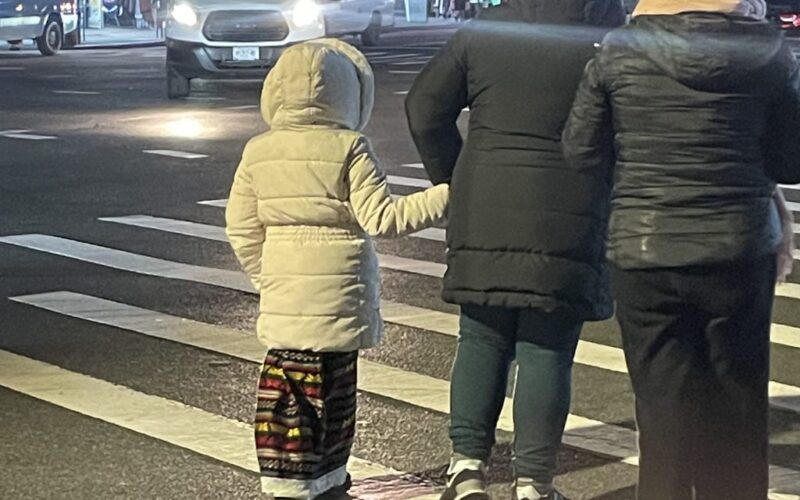
The Trump administration last winter rescinded Department of Homeland Security guidance on avoiding arrests in sensitive locations like houses of worship or schools. Rumors swirled on social media that ICE would raid the churches. Still, like the Maccabees who measuring out their insufficient oil and kept going, the Guadalupanos came anyway, children in huipil, the native dress of their great-grandparents, teenagers clutching sidewalk-bucket roses wrapped in red paper, their parents, New York’s workers at the end of another 12-hour day.
Some of us Blancos were lookouts for our neighbors, walking the perimeter of our churches as people hurried in. Jews know this watchfulness at the holiest of times.
Late in the night I walked home worried, from one neighborhood to the next. On a side street deep in the Bronx, an almost sleigh bell tinkling of shells in ankle rattles broke my gloom. A dozen people resplendent in sequined mummer capes, riotous paper machete masks covering their faces, were dancing on the sidewalk before a giant statue of Guadalupe.
Indigenous men from Southern Mexico, their costumes mock the Spaniards who sought and failed to annihilate their ancestors. They danced like Maccabees might have danced, were they dancers. Then clown car like out of a tiny shop came the mariachis and the ballet folklorico troupe, teenage girls in long dresses, their black hair pulled tight. Suddenly a profusion of tamales was passed through the growing crowd and cinnamon-laced champurrado.

In one of New York’s dozens of work-six-days-still-can’t-afford-the-rent, don’t-want-to-end-up-in-CECOT neighborhoods, stamping feet against the cold, women rested their chins on their children’s heads, pulling them close under their smiles. It’s not that one lives without fear. But one lives.
At dawn on Dec. 12 the devout came out of the churches into the half-light and disappeared into the already busy sidewalks, their Guadalupe-emblazed cloaks tucked under winter coats. There was work to do. They will return at Christmas to celebrate a God whose story of precarity and majesty they recognize. There’s no need for hope when times are good. Christmas comes at the darkest time, a reminder and maybe a promise.
Markey is an associate professor of journalism at Lehman College of the City University of New York. She is at work on a book about the people who fought for the Bronx in the 1970s and 80s.