





Content oversight provided by Studio 1847
For generations, the lawn has been more than just a patch of grass. The Western lawn’s love story is often traced back to 17th-century Europe, when Louis XIV transformed the meadows surrounding the Palace of Versailles into carefully manicured landscapes adorned with fountains and sculptures. This aesthetic — symbolizing order, leisure and status — spread across continents and centuries, shaping how residential outdoor spaces are designed and maintained today. From private gardens to expansive home lawns, regular mowing has become a familiar ritual tied to pride of ownership, lifestyle and the pursuit of a well-kept living environment.
However, maintaining a lawn comes with growing challenges. Time constraints, rising labor costs and the physical effort required for frequent mowing have made traditional lawn care increasingly burdensome. As household schedules become busier, homeowners are looking for solutions that reduce effort without sacrificing results. Now the lawn care industry is hoping for the same sort of revolution as the robots make their way to the front yard. Robot lawn mowers aren’t exactly new at CES, but there are a growing number on display this year. Manufacturers are hoping that the convenience and regained leisure time they offer will be enough to rope in American homeowners. And analysts say this could be the year they start to break through.
The U.S. lawn care market was valued at $57.77 billion in 2024, with an expected annual growth rate of 4.98% through 2033. Robot lawn mower sales, meanwhile, are expected to reach $10.62 billion by 2032, with a projected growth rate of 12% per year.
In recent years, battery-powered and semi-smart mowers have gained popularity, offering quieter operation and lower emissions. Some models introduced basic automation features, such as programmable schedules or assisted navigation.
Despite these advances, most of these mowers still require human intervention. Users must manually handle lawn edges, reposition machines around obstacles and oversee performance on complex or irregular landscapes. Although automation has improved convenience, it hasn’t fully eliminated the need for hands-on control.
The Unicut Series. Image provided by Hummingbird
At CES this year, GOALKER is leading the charge to make robot mowers a mainstream product. The company is showcasing the Unicut H1, H3, H5 and H3 Pro, which can cut large lawns up to 1,200 square meters. It features high-precision RTK positioning combined with a vision fusion system to achieve ultra-wide environmental monitoring, achieving an overall coverage rate of 99.8%. It also has a night mode powered by AI that balances low-noise(≤59 decibels) operation with reliable navigation.
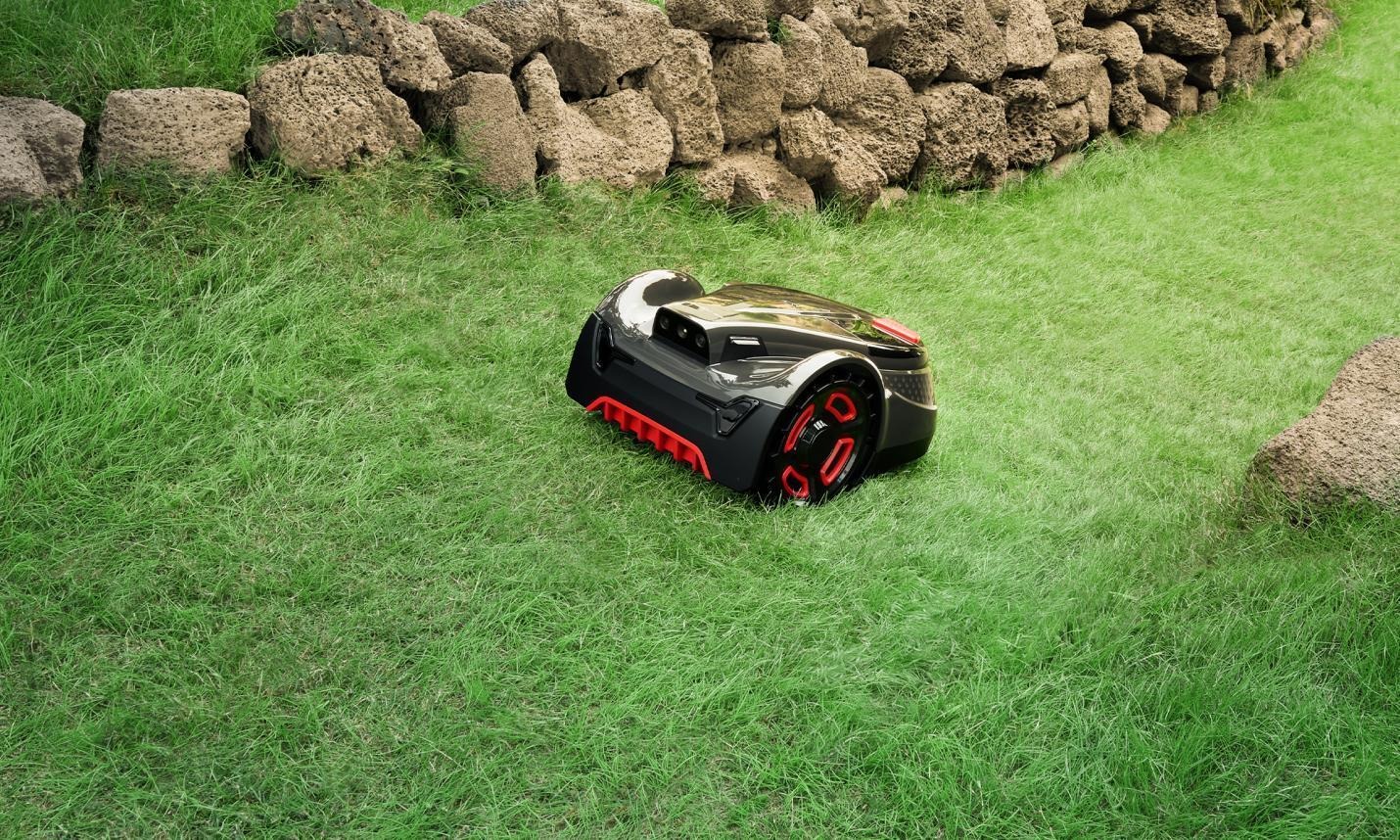 Unicut H3 Pro. Image provided by Hummingbird
Control is handled through the GOALKER mobile app, which allows users to schedule mowing times, define and manage multiple zones, adjust cutting heights and monitor progress remotely. For homes with front and back yards — or more complex layouts—the system can manage separate areas independently, ensuring consistent coverage without requiring multiple machines. Weather-aware scheduling allows the mower to pause during rain and resume automatically when conditions improve, while auto-recharging enables it to return to its dock and continue where it left off.
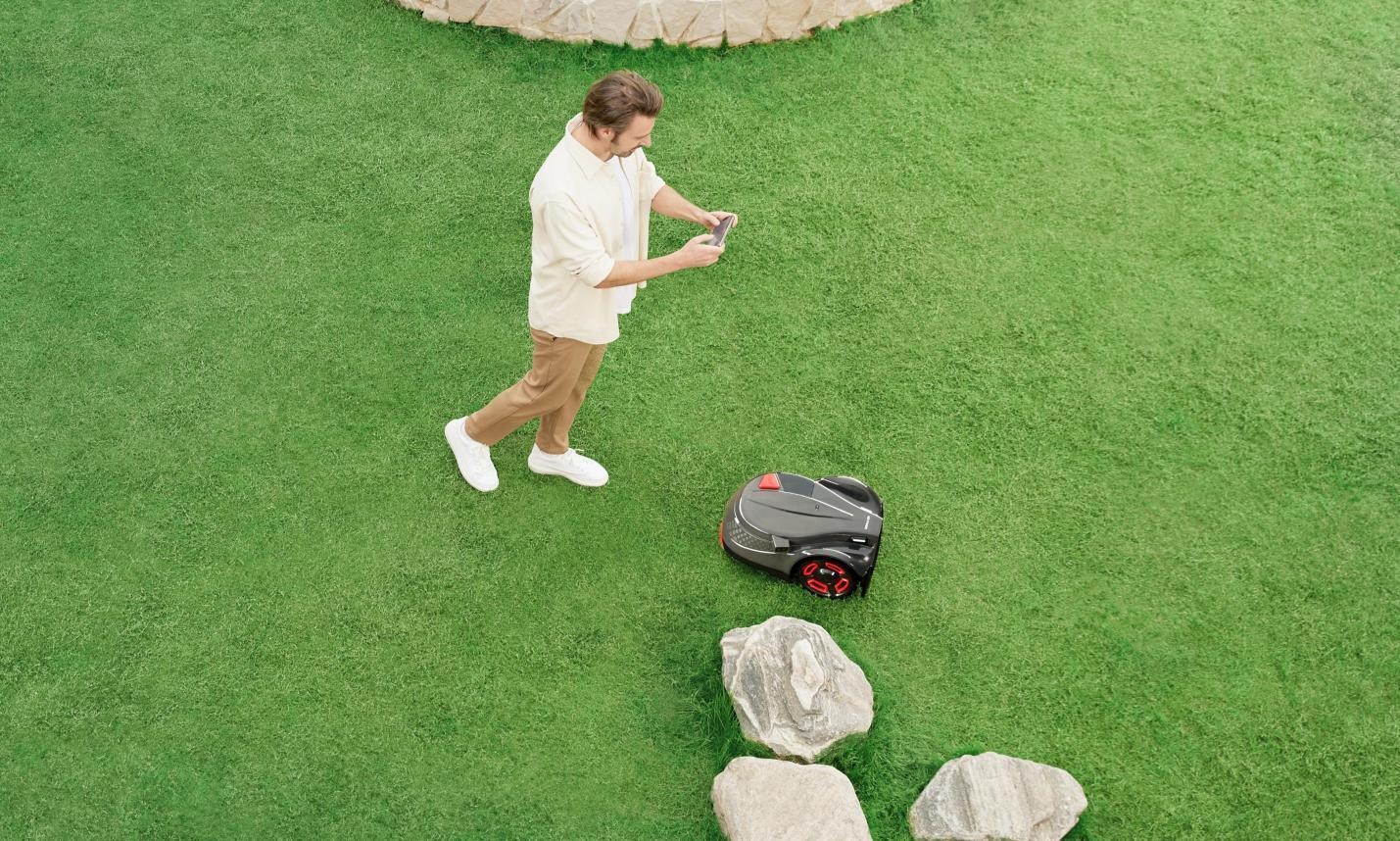 Controlling the Unicut H3 Pro. Image provided by Hummingbird
“This is a fully automatic, set-and-forget platform,” a spokesperson for GOALKER said. “Even on challenging terrain — including slopes of up to 45% (24 degrees) — or in wet conditions, the mower is designed to keep operating reliably, so homeowners don’t have to step outside every time the lawn needs attention.”
— Provided by Hummingbird