




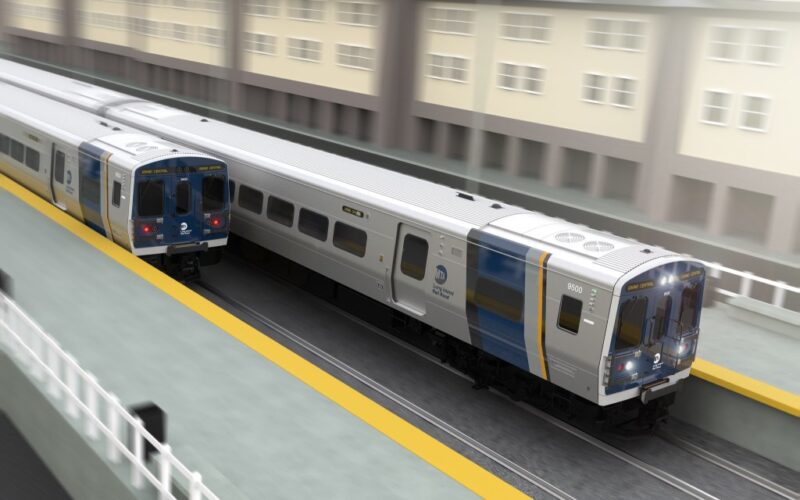
The MTA will soon invest nearly $11 billion for new railcars for both the NYC subway and the suburban commuter rail lines. This long-needed investment — part of the $68 billion MTA capital plan — will deliver a safer, more reliable ride to millions of New Yorkers daily.
But the MTA’s investment isn’t just good news for commuters. Its capital plan presents a historic opportunity to make real progress on one of the most pressing issues facing our country today: how to create millions of good, family-supporting manufacturing jobs in the United States to help rebuild the middle class.
In recent years, political leaders have touted efforts to revive the U.S. manufacturing sector. Generations ago, unionized manufacturing jobs helped build a stable middle class in this country. We’ve watched that stability erode through deindustrialization and attacks on workers. Rebuilding requires using every tool we have to ensure manufacturing jobs are safe, dignified and well-paid. Public dollars must do more than purchase goods. They must build opportunity.
As the presidents of national unions representing workers at the MTA and in railcar manufacturing and maintenance, we’re calling on the MTA to adopt and enforce — with robust transparency — the U.S. Employment Plan (USEP) in what will be the largest-ever capital purchase by the nation’s largest mass transit agency.
The USEP requires manufacturing companies bidding on public contracts to make real, enforceable promises: to pay fair wages, invest in training, and hire from communities that have long been excluded from these opportunities. Once selected, those promises aren’t just words, they’re written into the contract, with regular reporting to ensure companies are held to the standards our public dollars demand.
Historically, when public agencies use strong policy tools, working people — and their communities — benefit. When it comes to public sector construction projects, project labor agreements and prevailing wage policies have long ensured that workers on those projects are guaranteed fair wages, safe conditions, and real accountability.
The MTA has awarded billions of dollars to Kawasaki in public contracts, but a 2022 audit by state comptroller of the M9 railcars noted that Kawasaki contributed to delays and cost overruns through “inadequate training” and poor quality assurance oversight at its Nebraska facility, “ineffective inspections” that failed to catch defects before delivery, and “inadequate staffing” at its New York facility.
Such breakdowns undermine public trust and shortchange riders and workers alike. A tool like the USEP — if properly implemented — encourages companies to invest in their workforce and avoid the problems and delays that come with poor training and understaffing — benefits that we have long known project labor agreements to deliver.
In 2018, the MTA incorporated the USEP into a major railcar contract awarded to Kawasaki Rail Car, now worth $4.5 billion. Kawasaki earned points for a strong jobs plan with commitments on job creation, wages, and benefits. Yet the public still doesn’t know what those commitments are or whether the company is meeting them. The MTA hasn’t made the information public, following Kawasaki’s own claim that wage data are “trade secrets” that could upset non-union workers. For its next contract, the MTA must commit to real transparency.
The USEP isn’t just about oversight. It’s about transformation. For too many workers, especially in manufacturing, the jobs available today are low-wage and unstable. The USEP flips that script. By requiring companies to commit to fair wages, training programs, and equitable hiring, it turns public procurement into a pipeline for economic mobility.
The USEP is no pie-in-the-sky fantasy. LA Metro has had its own version of a USEP in place since 2018, recently updated and expanded in 2022 to cover all rolling stock procurements of $50 million or more for L.A.
Nationwide, this USEP has led to the creation of good union manufacturing jobs in New York, Alabama, California, Illinois, Kentucky and other examples from around the country.
The MTA should adopt the USEP and set an example on how to use public investments to rebuild America’s manufacturing sector.
Bryant is the international president of the International Association of Machinists. Coleman is the general president of the Sheet Metal, Air, Rail and Transportation Workers (SMART). Samuelsen is the international president of the Transport Workers Union.