




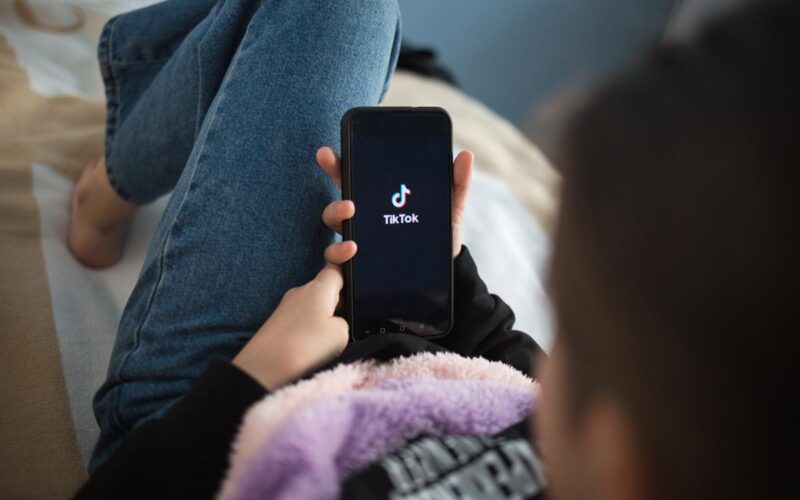
A 19-year-old California woman has reached a settlement with TikTok just hours before the scheduled start of the trial in her suit alleging that the social media platform designed its algorithm to hook users, harming their mental health.
The woman, who has only been identified as “KGM,” previously reached a separate settlement with Snapchat’s parent company Snap. Terms of both settlements were not disclosed.
News of the latest settlement was first reported by Bloomberg.
The Post has sought comment from TikTok and Snap.
The plaintiff has also sued Meta, the parent company of Facebook and Instagram, and Google-owned YouTube on similar grounds in Los Angeles Superior Court.
KGM said in her filing that she began using social media when she was 10 years old.
She claimed that her usage of the apps led her to develop severe mental health conditions including depression, suicidal ideation, anxiety, self-harm behavior and body dysmorphia.
In the complaint, KGM alleged that TikTok deliberately installed its continuous-scroll feature as well as autoplay, push notification and algorithmic content targeting in order to maximize engagement and foster addiction.
The cases are part of an ongoing legal battle involving more than 2,200 lawsuits alleging that major social media platforms intentionally designed addictive products that damage young users’ mental health.
Studies estimate that 5% to 10% of social media users meet the criteria for behavioral addiction, with significantly higher rates among adolescents.
Teenagers now spend an average of 7 to 9 hours a day on screens, much of it on social media platforms designed for constant engagement.
Multiple large-scale reviews have found consistent links between heavy social media use and worsening mental health.
Researchers have associated prolonged use with higher rates of depression, anxiety, psychological distress, sleep deprivation and academic decline, particularly among children and teens whose brains are still developing.
But a growing body of research has challenged the idea that social media use is inherently harmful to mental health.
Large reviews and meta-analyses have found that, for most users, overall effects are small, mixed, or statistically close to zero, with factors such as family relationships, socioeconomic conditions and offline stressors playing a far greater role in mental wellbeing.
A major meta-analysis published in 2026 that reviewed 46 studies concluded there is no reliable evidence that general social media use, by itself, causes mental health problems.
Similarly, an Oxford-led analysis of global internet data found no consistent link between time spent online and worse mental health outcomes across countries and age groups, with associations often weak or non-significant.
If you are struggling with suicidal thoughts or are experiencing a mental health crisis and live in New York City, you can call 1-888-NYC-WELL for free and confidential crisis counseling. If you live outside the five boroughs, you can dial the 24/7 National Suicide Prevention hotline at 988 or go to SuicidePreventionLifeline.org.