




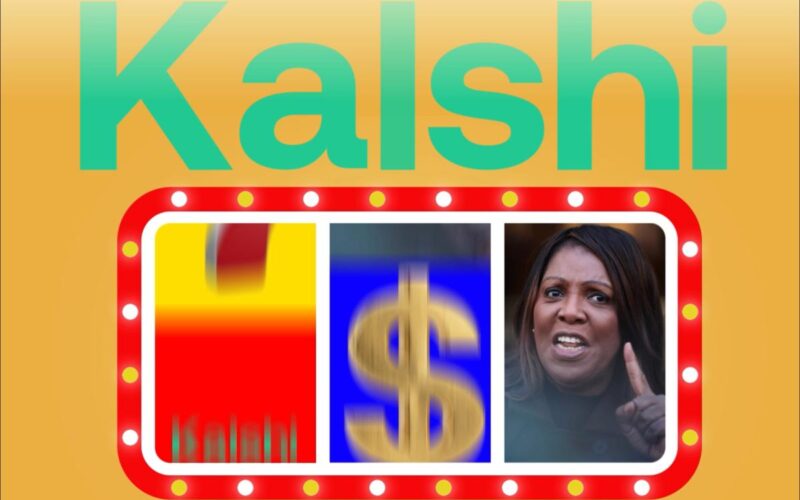
State regulators taking aim at prediction markets for regulation isn’t new, but according to Kalshi, what is new is New York singling out its business as an “illegal gambling operation” for much of the same wagering that can be found on just about every similar platform, On The Money has learned.
At issue: A lawsuit recently filed by New York Attorney General Tish James with the full blessing of fellow Dem Gov. Kathy Hochul. Kalshi says the suit takes aim at its entire business model – everything from predicting the outcomes of “Big Brother Season 28,” to the outcomes of various political races to the biggest-ticket items involving sports.
The civil lawsuit charges that Kalshi’s business model is “illegal” because it’s essentially a gambling hub, a high-end bookie that needs to be regulated and licensed by the state the same way as casinos and other “legal” wagering operations. Among the remedies the state is seeking is Kalshi getting licensed by the state, and turning over billions of dollars in what it describes as ill-gotten gains.
Kalshi argues the suit is a death blow to its business since it doesn’t consider itself a gambling company, but something more like a commodities exchange that doesn’t meet state licensing requirements. It’s regulated by the federal government because it’s actually offering futures contracts, not much different than the puts and calls monitored by the Commodity Futures Trading Commission. Plus, it offered James and Hochul lots of remedies that were rejected.
The battle between states and the feds over various regulated businesses like brokers has been raging for years, with the NY AG’s office being in the middle of it. Who can forget how Eliot Spitzer made a career targeting alleged Wall Street fraud that for years came under the jurisdiction of the federal Securities and Exchange Commission (that is, before he became governor and resigned in disgrace over a prostitution scandal). My best guess is that the Supreme Court will weigh in on this subject at some point soon.
Meanwhile, what On The Money does find interesting now is Kalshi’s contention that it’s being singled out. Last I checked, Kalshi isn’t the only prediction market – it competes for pole position with Polymarket, which also isn’t licensed by the state (both are regulated by the feds at the CFTC). Why isn’t Polymarket named?
Given the broad accusations in the New York litigation, you could argue that deep-discount brokerage Robinhood also should come under the state’s thumb; it, too, offers so-called “event contracts” (betting yes or no on various sports and political outcomes that are described in the state’s Kalshi litigation as illegal gambling).
Or how about the CME Group? The largest options and derivatives market in the world, which is based in Chicago, doesn’t dabble in sports events contracts, but it offers these same contracts on many others. And certainly all have “customers” in New York State.
But reps for James and Hochul point out that they’ve sued digital currency platforms Coinbase and Gemini over similar issues, so it’s not like Kalshi is being singled out. As far as the other venues are concerned, they declined comment other than to say their business models are different than Kalshi’s; the CME, for instance, focuses its events-based on economic issues that help with trader hedging strategies.
“Kalshi came to New York, blatantly violated state law, knowingly took actions that put consumers – including minors – at risk, and deprived New Yorkers of billions in revenue,” Hochul’s office previously said. “Weak attempts to self-regulate are meaningless; if a company willfully violates state law, they must face consequences.”
Well, those “minors” are actually over the age of 18 – the age of consent to buy futures and also serve in the military even if you have to be 21 to gamble in New York State.
A rep for Kalshi also counters that the state walked away from a generous settlement offer complete with safeguards and revenue guarantees and instead chose to sue.
“The only ones depriving the state of billions are themselves,” the rep told On The Money. “They walked away from money that could have funded schools, transit, and healthcare … Nothing says ‘Empire State’ like declaring war on the very businesses whose revenue can fund critical social services.”
And yes there are differences between all the firms doing this stuff, though they all offer the same core product: event-driven ways to make (or lose) money on wagers. That’s why the people at Kalshi have their theories. They pointed to significant Hochul campaign contributions from the gaming industry and related businesses that compete with prediction markets for wagering, and have been expanding in the state in recent years, particularly in the city.
As for playing favorites, a Hochul rep said, she “makes decisions based on the laws of our state and how best to protect New Yorkers, nothing else.
“Kalshi’s illegal gambling operation has broken these laws and that alone is why they are being held accountable. Kalshi may have thought you can buy an exemption to state law, but that’s not how things work in New York.”