




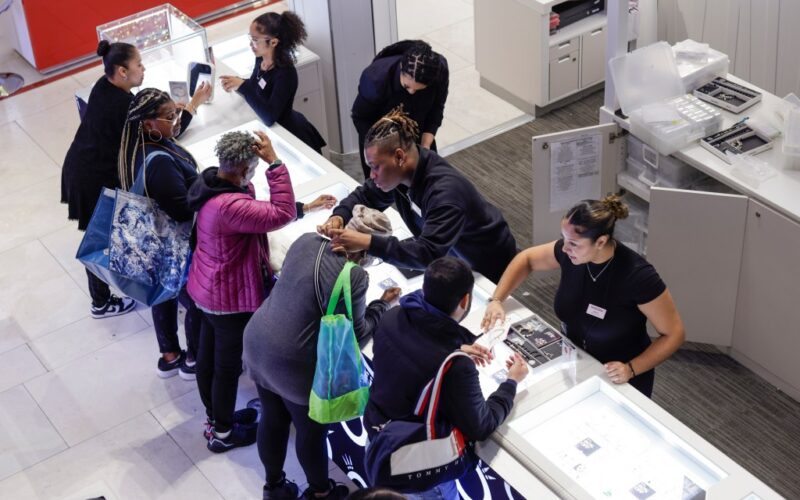
For most people, the holiday season is about family, celebration, and joy. But for the people who make that joy possible, the cashiers, stockers, warehouse pickers, drivers, and food workers who keep the holiday economy moving, it’s a time of exhaustion, stress, and too often, fear.
This year, the strain on working people is greater than ever. Prices keep rising, seasonal hiring is shrinking, and tempers are running high. Retail theft and customer aggression are growing problems. And new technology, including AI, is transforming work in ways that strip people of autonomy instead of improving their jobs. What was supposed to make work easier is now being used to monitor, discipline, and squeeze employees harder than ever.
Too often, the focus is on how fast goods can move and profits can rise, rather than on the well-being of the people who make it possible. Holiday workers are expected to meet unrealistic demands with a smile, while juggling irregular hours, unpredictable schedules, and the pressure to cover shifts when staffing falls short. Workers deserve more than polite gratitude; they deserve jobs that provide stability, safety, and a shot at a decent life.
Across stores in every city, frontline employees face a surge of harassment and even violence from frustrated shoppers. Many are blamed for store policies or prices they didn’t create. No one should have to fear for their safety just to earn a paycheck. Employers have a duty to maintain safe staffing levels, train workers to de-escalate tense situations, and provide real security. And customers can do their part, too. Patience and respect cost nothing, but they mean everything to the people behind the counter.
The pressure is even more intense in the sprawling fulfillment centers that drive online shopping. At companies like Amazon, workers are tracked by algorithms that measure every second of their day, including how fast they move, how long they pause, and how many packages they process. Even short breaks can trigger warnings or discipline. Mandatory overtime and impossible, and often unknown quotas push workers to the breaking point, leading to injuries and burnout.
That’s not innovation. It’s exploitation disguised as efficiency. People are not machines, and no algorithm should define their worth. When corporations put speed and profit above safety and humanity, everyone loses. Amazon and other major retailers need to hire enough people to do the job safely, slow down the pace, and stop union-busting. Workers who organize to improve their jobs deserve respect, not retaliation.
And let’s not forget the workers who make the holidays happen long before the shopping begins, the farmworkers who harvest crops, the food processing workers who package goods, the warehouse and distribution workers who move it all to store shelves and ultimately our dinner tables. Many of them labor in extreme heat or cold, often without adequate protections or fair pay. Their work sustains our celebrations, yet their struggles remain largely invisible.
The truth is, the retail and food supply industries are changing faster than ever. AI now touches nearly every part of the system, from scheduling and staffing to loss prevention and performance monitoring. But technology should serve people, not exploit them. Progress can’t mean turning workers into data points or replacing human judgment with cold algorithms.
Protecting workers’ voices is more important than ever. When employees can organize and bargain collectively, they can help shape how technology is used, setting fair limits and ensuring that innovation improves jobs instead of undermining them. That’s why we need strong laws to protect workers from violence, regulate the use of AI in the workplace, and cap production quotas that jeopardize health and safety.
Policymakers must ensure that innovation and profit never outweigh fairness, dignity, and basic decency on the job. Empowering workers to have a say in these changes isn’t just good policy; it’s good for everyone.
But laws alone aren’t enough. Every employer, policymaker, and consumer has a role to play in ensuring that this truly is a season of goodwill starting with how we treat the people who make it all possible. The real spirit of the holidays isn’t measured in sales figures or delivery speeds. It’s reflected in how we value one another.
So, as you shop and celebrate this year, take a moment to thank the workers who make it possible and to demand a system that treats them with the dignity and respect they deserve every single day. Because goodwill shouldn’t end when the decorations come down.
Appelbaum is president of the Retail, Wholesale and Department Store Union (RWDSU).