


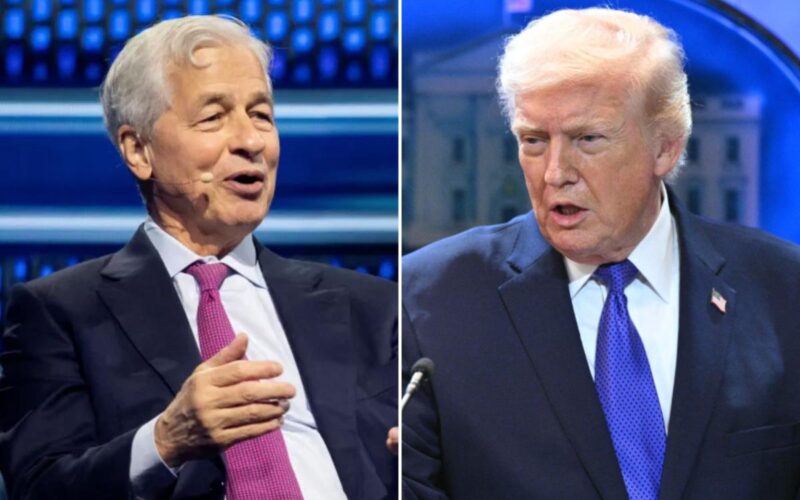
JP Morgan predicted fresh economic turbulence from Friday’s Supreme Court ruling nixing President Donald Trump’s emergency tariffs, warning Uncle Sam could be forced to refund as much as $200 billion to US businesses.
One of the bank’s top researchers on economic policy, Michael Feroli, warned the decision could still spark heightened trade uncertainty and stunt business spending even as Trump administration officials vowed to revive the duties using other laws.
“The Court’s ruling remanded this issue (of refunds) to the lower courts, so we won’t know the full amount or timing of any … rebates,” Feroli wrote.
“While the official data from [US Customs and Border Protection] is a bit stale, we estimate the amount at stake to be around $150-200 billion,” he added in the note to clients.
“If the rebates were passed on to consumers, the boost to activity would be significant. In the more likely event that businesses keep the cash, the boost to activity should be smaller.”
Several major corporations previously filed lawsuits to seek refunds in anticipation of the ruling by the Supreme Court.
They include retail giant Costco, clothing brand J.Crew, footwear firm Crocs, Goodyear, and EssilorLuxottica, the French-Italian multinational that owns the Ray-Ban and Oakley eyewear brands.
Here’s the latest on President Trump’s tariffs following Supreme Court ruling:
The Post has sought comment from all five firms and the Treasury Department.
JPMorgan forecast that any legal rulings that could force the administration to hand back duties payments and the subsequent economic disruption from yet another trade policy upheaval would lead to a bigger fiscal deficit in 2026.
The paper said it would be equivalent to 6.6% of GDP, a half-point increase — roughly $2.1 trillion based on current economic data.
Governments run a fiscal deficit when they spend more money in a year than they collect in taxes, adding to a country’s overall debt pile.
But the research paper by the US financial giant underlined that senior members of the administration repeatedly warned that tariffs would not be scrapped.
Feroli’s note to clients quoted Treasury Secretary Scott Bessent as saying the administration could “recreate the exact tariff structure” through other means, while Commerce Secretary Howard Lutnick was quoted as saying that “tariffs are here to stay.”
“Given the statements made by various administration officials, a reasonable base case is that the administration will use the various legal authorities to leave unchanged the average effective tariff rate facing US purchasers,” the top economist wrote.
“Even this outcome would entail a significant realignment of tariffs placed on different products from different countries, thereby creating winners and losers. This would also mean a material increase in trade policy uncertainty,” he added.
The ruling leaves intact some sectoral tariffs, but JPMorgan economists estimate the average effective tariff rate will drop from 9.4% in December, the latest available data, to just over 4% without the IEEPA duties.
Trump promised Friday afternoon to sign documents to impose a 10% tariff on most imports
That’s up sharply from 2.3% in 2024, before Trump’s move to slap tariffs across a wide range of industries began.