




When government fails, public frustration doesn’t just build — it metastasizes. And when the failure drags on long enough, extreme partisanship rushes in to fill it. Not with policy, with politics. Not management, messaging. The result is whiplash.
That’s what Minneapolis is exposing right now. For decades, the federal government has failed to build a modern, durable immigration system. Minneapolis is simply the latest — and most disturbing — episode produced by that failure.
First, the Joe Biden swing. Reacting to Donald Trump’s first-term hardline posture, President Biden lurched in the other direction, loosening controls without building the capacity to manage the predictable surge. It was governance by press release: a moral posture with no mechanics.
Then the bill came due. In cities nationwide, budgets strained, priorities crowded out, and local governments triaging problems Washington created, while Americans were left with the sense that nobody was in charge.
So the pendulum swung back with Trump, reelected with a mandate of border security and law and order. But instead of surgical enforcement focusing on “the worst first,” the country got broad sweeps: quotas that reward volume over judgment, overwhelming shows of force, and erosion of basic constitutional rights.
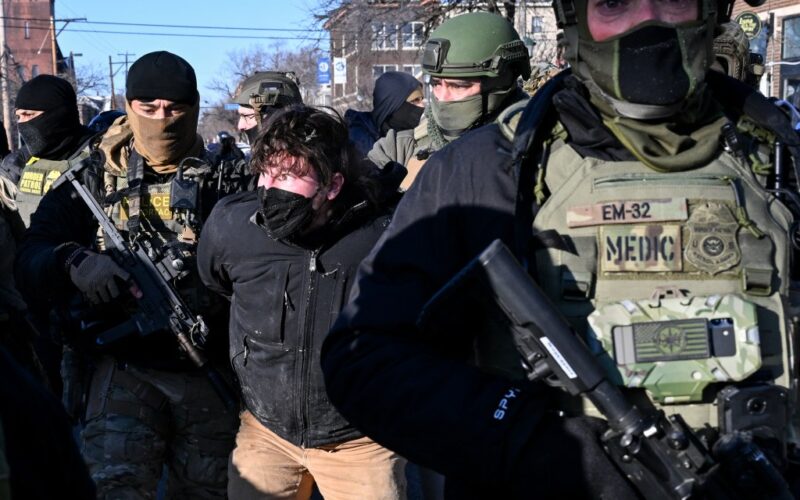
Combine those ingredients and the result is images that horrify a nation grown tragically indifferent to things that should stop a civilized society in its tracks. Masked agents. Families separated. And two dead Americans — Renée Nicole Good and Alex Pretti — hitting a nerve so raw it cut through our national numbness. When something does that, it isn’t merely political. It’s visceral. It’s a warning.
Now, yes: not every protester is perfect. Some show up to incite, not reform. We saw that dynamic after George Floyd’s murder, when righteous frustration sometimes spilled into mob momentum, and bad actors hijacked legitimate outrage.
But opportunists in a crowd don’t excuse reckless governance. They make competent governance more urgent.
Democrats must not slip back into the politically toxic and operationally incoherent “defund the police” mentality. Law and order isn’t optional in a functioning society. Neither is immigration reform. The question is how you deliver both.
Minneapolis isn’t just an “incident.” It’s what happens when a nation tries to run an economy that needs immigration through a system that can’t process it and then compensates with partisan improvisation.
Rather than playing chicken with government shut downs and short-gap solutions, Trump should seize this moment to do what modern presidents have failed to: reform America’s hopelessly broken immigration system, one that looks like this:
- Modernize lawful pathways to citizenship tied to labor-market reality, paired with real employer enforcement with penalties for those who knowingly break the law.
- A fast, humane, legitimate asylum process: more adjudicators, clearer standards, decisions made in months, not years, with protection for the truly persecuted, and swift removal for the fraudulent.
- Enforcement aimed where it belongs: violent criminals, gang members, and repeat offenders without turning neighborhoods into conflict zones.
- Transparency and accountability: clear identification, body cameras, and independent investigation when lethal force is used.
And here’s the irony: Trump may be the best-positioned American president in decades to get it done. Just as only Richard Nixon could go to China, only Trump can hammer out immigration reform — because he is the only modern politician whose enforcement motivation can’t be dismissed as softness.
If Trump wants a Nobel Peace Prize, he should stop scouring for it across the globe and start looking at the streets of Minneapolis. The question isn’t whether he can be tough. It’s whether he has it in him to do what’s hard.
DeRosa is a Democratic strategist and author of “What’s Left Unsaid: My Life at the Center of Power, Politics & Crisis.”