



In New York City, we rely on our strong safety net to ensure that the most basic human necessities are within immediate reach for anyone who is struggling and calls this city home.
We do not qualify access to critical services — food pantries, emergency shelters for domestic violence survivors, health care supports, and more — because it can be a matter of life or death for New Yorkers in crisis, and entire communities would be worse off. We would be surrounded by widespread homelessness on city streets, schools full of hungry children, and families forced to stay in dangerous situations.
Any effort to deprive our vulnerable neighbors of these lifelines would have devastating and dire consequences that would be felt by all New Yorkers. A recent federal action seeking to exclude certain noncitizens from access to these life-saving supports could also risk creating barriers to access for citizens.
In 1996, Congress enacted the Personal Responsibility and Work Opportunity Reconciliation Act (PRWORA), better known as welfare reform. The law transformed the nation’s system of public benefits by strengthening eligibility requirements for government assistance to reduce reliance on welfare.
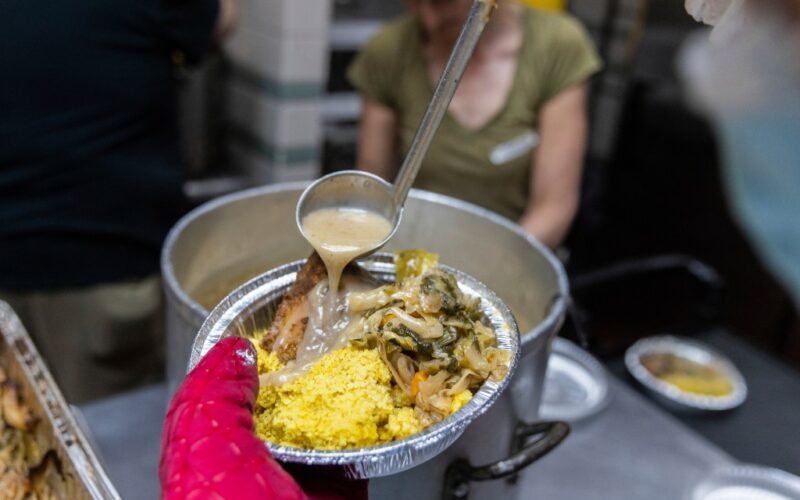
PRWORA also imposed limitations on noncitizens’ eligibility for public benefits at the federal, state, and local level, though importantly, programs like food pantries and soup kitchens which provide in-kind services and are essential to life and safety for vulnerable households, were exempted from the federal law.
For nearly three decades since, through federal administrations under both political parties and even President Trump’s first term, localities’ ability to deliver programs under this law remained unchanged. Social service providers and decision makers at every level of government relied on consistent federal guidance to administer and develop benefits.
But in July, the Trump administration upended the status quo, not through congressional action, but by revising long-standing interpretations to significantly broaden the scope of programs that are considered public benefits and thus subject to PRWORA.
This change essentially eliminates so-called “non-qualified” non-citizens’ access to programs like food pantries that are now deemed to be public benefits, programs for which they had previously been eligible for decades and which have allowed many to lead healthier, safer lives.
In doing so, the Trump administration is potentially jeopardizing access to life-sustaining supports for large swaths of non-citizens, including many who are in the country lawfully. Equally troubling, this abrupt change in guidance could deprive many vulnerable U.S. citizens from accessing many such programs if they are not able to prove their citizenship.
This shift would also require local governments to undertake the incredibly burdensome task of verifying someone’s citizenship or immigration status before they can access key basic services. Frankly, this is untenable: A hungry New Yorker standing in line at a community pantry should not have to show proof of immigration status before they can get a loaf of bread.
This is why services like food banks and soup kitchens that underpin the health, safety, and fundamental wellbeing of entire communities have been exempt from PRWORA for nearly 30 years. But the federal administration feels otherwise, and the U.S. attorney general eliminated those exemptions. This change in federal policy is not only about access to federal programs; it also impacts how cities can spend their own funds.
Following a lawsuit filed by New York Attorney General Letitia James and a coalition of 20 other state attorneys general, there is a preliminary injunction in place blocking the implementation of these changes in New York. While this decision offers immediate relief, it is far from a permanent solution. The federal government has appealed the injunction, leaving the fate of these new interpretations uncertain. Regardless of the outcome of this case, there are steps that can be taken to mitigate the impact of these changes.
When Congress enacted PRWORA, it gave states the ability to take action to offer public benefits to noncitizens, regardless of their immigration status. We call upon the governor and the state Legislature to take every possible step to ensure that access to critical, life-saving programs is not disrupted, and we stand ready to work with them to craft a path forward.
We must use every tool at our disposal to protect New York’s safety net and ensure that our vulnerable neighbors are able to meet their basic human needs, regardless of their immigration status.
Park is commissioner of the New York City Department of Social Services.