



President Donald Trump is preparing to scale back some steel and aluminum tariffs as rising prices weigh on voters ahead of November’s midterm elections, according to a report.
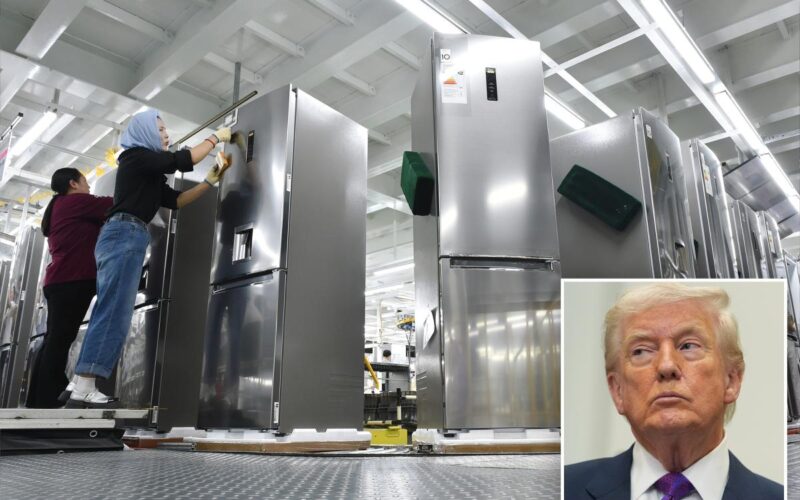
Trump imposed tariffs of up to 50% on steel and aluminum imports last summer, later expanding the levies to products made with those metals, including washing machines and ovens.
According to the Financial Times, White House aides are now reviewing which goods to exempt and plan to halt further expansion of the tariff list.
Instead, officials would focus on more targeted national security reviews when determining which duties remain in place.
Officials have privately acknowledged to the FT that the metals tariff regime has become “too complicated to enforce,” as the sprawling inclusion process has saddled regulators with a growing list of goods subject to duties based on their metal content.
The system has produced inconsistent outcomes and administrative bottlenecks, with nearly 100 recent filings seeking tariffs on products ranging from bicycles to cake tins — prompting calls within the administration to simplify the framework and narrow its scope.
The Post has sought comment from the White House.
Tariffs have delivered a multibillion-dollar blow to the auto sector, squeezing both Detroit and foreign carmakers with US operations.
Ford absorbed about $1 billion in tariff-related costs in 2025, while GM took a $3.5 billion hit, with $1.1 billion shaved off second-quarter operating profit alone.
Foreign brands were hit even harder.
Mercedes-Benz saw revenue fall 9.2% and profit nearly cut in half, Honda’s earnings plunged 42% and Toyota projected a 25% drop in net income.
While sticker prices didn’t immediately surge — the average new vehicle price still climbed to a record $50,326 in December — automakers largely absorbed the costs to protect market share, a strategy analysts say will fade as companies begin passing more of the tariff burden on to consumers in 2026.
Public frustration over the economy has intensified as tariffs ripple through consumer prices, according to the FT.
A recent Pew Research Center poll found that more than 70% of US adults rate economic conditions as fair or poor, while 52% say Trump’s economic policies have made conditions worse.
Trump’s tariff blitz has pushed average US import duties from about 2.6% to roughly 13% this year — the highest level in decades — intensifying scrutiny from lawmakers in both parties.
Several House Republicans recently joined Democrats in backing legislation to overturn tariffs on Canada, a measure Trump is expected to veto.
A Supreme Court ruling on a case challenging the president’s authority to impose certain tariffs is also expected soon, adding legal uncertainty as the White House weighs whether easing the levies could blunt voter frustration before November’s midterms.