




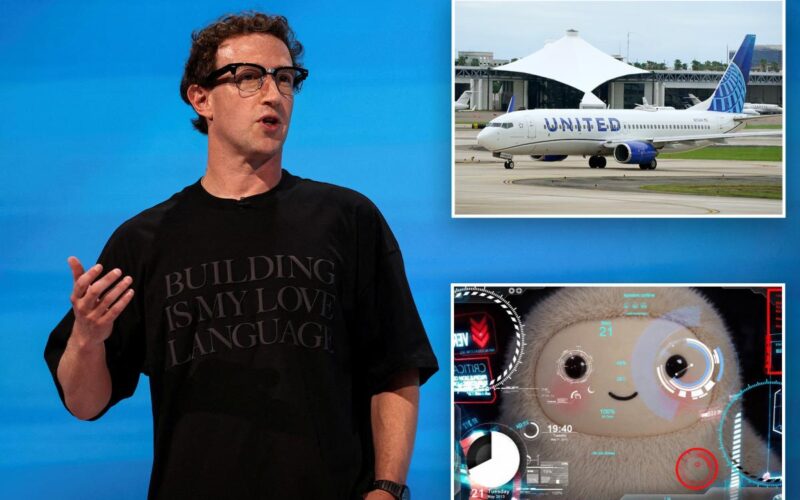
Shares of Meta tumbled Wednesday on news United Airlines is banning artificial intelligence agents from booking flights for travelers – nixing a highly touted use case for the tech giant’s new Muse agent.
Shares of the Mark Zuckerberg-led company fell about 2% — dropping to about $628 per share.
United cited security risks and the potential for AI agent bookings to violate federal rules. The airline said it was rankled by the idea that AI agents require access to a customer’s personal information, including payment information, to make bookings.
“To be honest, I don’t want to create another middleman,” United CEO Scott Kirby said earlier this week.
The airline also voiced concern about data safety, saying in a statement: “Sharing account credentials with personal, third-party, AI assistants can expose sensitive information, and actions taken by these tools may result in unintended purchases, account changes, or use of MileagePlus miles.”
The airline added that use of AI agents to check into flights could violate federal regulations, including rules requiring travelers to verify in person that their luggage does not contain banned substances.
“United is taking steps to restrict access — directly within our digital platforms and indirectly via travel agencies and aggregators — to prohibit use by unauthorized, third-party personal AI agents or assistants,” said the carrier, which is updating its booking and ticketing policies on the new rule.
United’s move deals Meta a significant blow as its Muse agent faces sky-high expectations after the social media titan has pumped torrents of capital into AI – the latest pressure point after investors in Meta and other AI-heavy tech giants have grown skittish about the AI trade in recent weeks.
Meta and other AI companies are betting users will rapidly adopt their agents to help them with mundane tasks ranging from researching which products to buy to planning out and executing on trip purchases.
United’s action comes after Muse faced privacy and security issues since its launch in September. For instance, a security firm found a glitch that exposed sensitive info including loan applications with the requested amount, bank transaction details, a real estate investor’s internal performance report, and a corporate revenue doc intended for the CEO.
Banks, retailers and others are wrestling with how best to handle an expected rise in agent use which could take sensitive tasks out of the hands of service providers.
Muse has already weighed on financial stocks as investors fear the bot could be powerful enough to transform the industry – providing serious competition to human advisors.
“Corporate leaders in the banking and retail industries have taken similar actions regarding AI agents and we encourage others to consider measures that preserve the data and security of their customers and strengthen safety,” United said.
Henry Harteveldt, an aviation analyst at Atmosphere Research Group, told CBS News that United was sending a clear message that it wants to keep bookings as in-house as possible.
“United is saying they don’t want to add yet another, and potentially even more powerful, intermediary than they already face in terms of Google search, price-comparison metasearch sites and online travel agencies,” Harteveldt said. “Flight searches cost airlines money, and undoubtedly United wants to avoid the expense associated with the surge of AI bot flight searches.”