


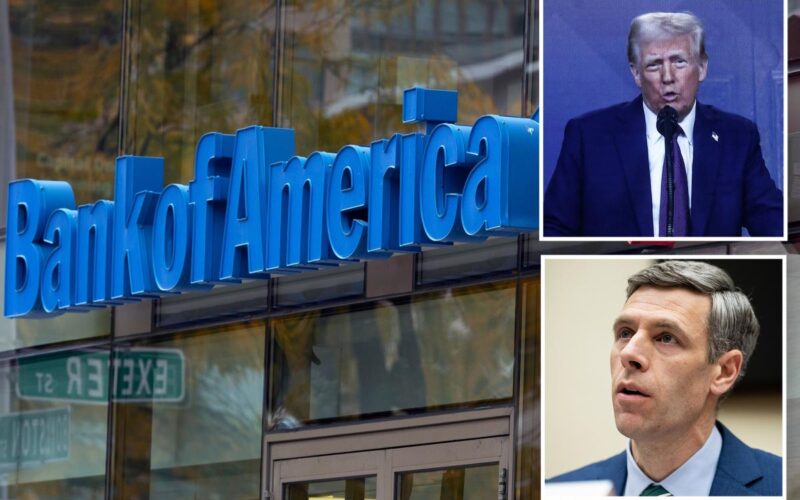
Nine of the biggest banks in the country, including JPMorgan Chase and Bank of America, improperly refused to do business with a range of politically controversial industries — from coal and tobacco to private prisons — according to a top banking regulator.
The report from the Office of the Comptroller of the Currency stems from an investigation that could back up claims by President Trump that the country’s largest banks took part in what the administration has called “politicized or unlawful debanking activities.”
Debanking refers to banks closing accounts or denying services to customers.
Along with JPMorgan and Bank of America, the banks named by the Comptroller were Citibank, Wells Fargo, US Bank, Capital One, PNC Bank, TD Bank, and BMO Bank.
All have denied debanking allegations on multiple occasions in the past.
“It is unfortunate that the nation’s largest banks thought these harmful debanking policies were an appropriate use of their government-granted charter and market power,” Comptroller of the Currency Jonathan Gould, a Trump appointee, said in a statement.
A bank charter is a government license that allows a bank to operate.
The report stated the victims of debanking worked in areas from firearms manufacturer to oil and gas, though it did not name the alleged victims.
The document focused in particular on environmental or sustainability-related decisions that banks made in prior years, in an effort to satisfy investors who said the industry needed to do more to address climate change and racial inequality. The Comptroller stopped short of calling those actions unlawful.
“While many of these policies were undertaken in plain sight and even announced publicly, certain banks have continued to insist that they did not engage in debanking,” Gould said. “Going forward, the OCC will hold banks accountable for these actions and ensure unlawful debanking does not continue.”
Banks have said they do not close accounts for political or religious reasons.
They maintain that decisions to avoid certain industries or clients follow laws that make banks watch for criminal activity and money laundering.
Banks also say such practices respond to other regulatory pressures meant to protect the banks.
The Bank Policy Institute, a lobbying group for banks, said Wednesday that the industry supports creating new rules to ensure fair access to banking.
“It’s in banks’ best interest to take deposits, lend to, and support as many consumers and businesses as possible to drive economic growth,” the group said.
The White House in August issued an executive order accusing banks of discriminating against conservatives and cryptocurrency companies. It also threatened fines for lenders that dropped customers for political reasons.
Trump has said he and his businesses were debanked after he left office following the Jan. 6, 2021 riots at the US Capitol. The issue prompted the president to give a fiery dressing-down to Bank of America CEO Brian Moynihan in an online speech at Davos, Switzerland, earlier this year.
Debanking has since become one of the few points of conflict between banks and the White House, which has otherwise pushed a deregulatory agenda that is poised to benefit the industry.
The Office of the Comptroller of the Currency released preliminary its findings on Wednesday after asking the nine largest banks it oversees to submit reports on whether they had taken part in unlawful debanking.
The office said the investigation continues and that the agency could refer its findings to the attorney general.