



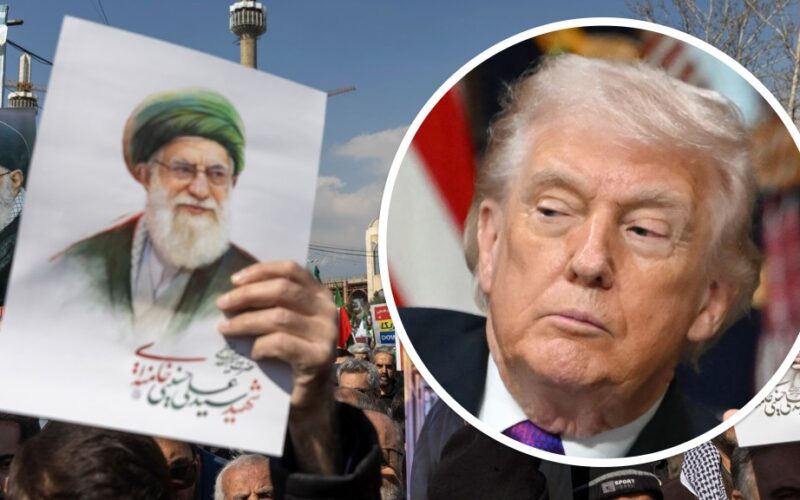
President Trump Friday demanded the “unconditional surrender” of Iran and installation of “acceptable” leaders as conditions to end the weeklong war with Tehran that has spread across the volatile Middle East.
“There will be no deal with Iran except unconditional surrender … and the selection of a great & acceptable leader(s),” Trump wrote on his social media site.
The president, who may have been responding to reports that Iranian officials could be open to peace talks, also vowed to rebuild Iran’s shattered economy once the war is over.
“We, and many of our wonderful and very brave allies and partners, will work tirelessly to bring Iran back from the brink of destruction, making it economically bigger, better, and stronger than ever before,” he said. “Make Iran Great Again (MIGA).”
The hardline stance from Trump came as Israeli warplanes pounded Beirut and Tehran in some of the fiercest strikes of the war and Iran launched another wave of mostly feeble retaliatory strikes against Israel and Gulf countries.
Trump’s latest comments were likely to raise further questions about the war launched a week ago by the United States and Israel, which appears increasingly open-ended and lacking a clear endgame.
Trump and his aides have put forward an ever-shifting set of rationales, goals and timelines for the war, leaving it unclear what it would take to end the conflict.
The president has at times said the strikes are aimed at ending Iran’s nuclear aspirations and missile attack capability. But he has also openly pushed regime change, a much thornier proposition.
The war has already spread to a dozen countries across the Middle East and beyond, and has caused a spike in oil prices.
Qatar’s energy minister warned that it could “bring down the economies of the world,” predicting a widespread shutdown of Gulf energy exports that could send oil prices soaring to $150 a barrel and spike gasoline prices for American consumers.

Israeli warplanes pounded Tehran and also rained widespread devastation on southern Lebanon and southern Beirut in an effort to crush resistance from the pro-Iran Hezbollah militia.
Iran meanwhile launched missile and drone attacks at Israel, as well as Kuwait, Qatar, Saudi Arabia and Bahrain, all countries that host U.S. forces. There were no immediate reports of casualties.
The war has killed at least 1,230 people in Iran, more than 120 in Lebanon and around a dozen in Israel, according to officials in those countries. Six U.S. troops have been killed.
Iran’s President Masoud Pezeshkian said Friday that “some countries” had begun mediation efforts in the conflict, without elaborating.