

Three candidates for the US House and Senate were suspended and fined by Kalshi for engaging in “political insider trading,” the prediction market platform announced Wednesday.
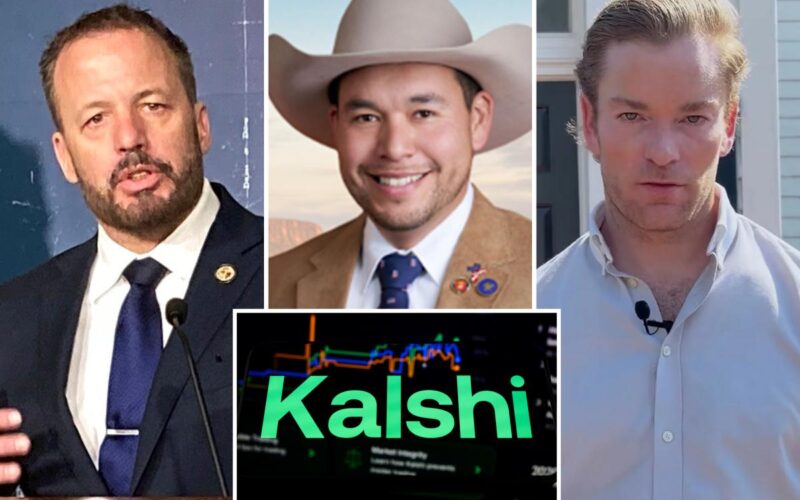
Kalshi, which allows users to bet on the outcome of future events, identified Democratic Minnesota state Sen. Matt Klein, who is running for the state’s 2nd District seat in Congress; long-shot former Texas Republican congressional candidate Ezekiel Enriquez; and Mark Moran, who is running for US Senate in Virginia as an independent, as having placed wagers to win their respective races.
“All three cases concern political insider trading and were flagged because of our newly released safeguards to block political candidates from trading on their own elections,” Robert DeNault, the head of enforcement and legal counsel at Kalshi, said in a statement.
“Just like in traditional financial markets, bad actors will try to cheat,” DeNault added. “Regulated exchanges must constantly evolve and adapt their systems to address insider threats.”
“These three cases are an example of how developing proactive engineering solutions can help identify illicit trading activity.”
Klein, who had previously co-sponsored a bill to ban prediction markets in Minnesota, admitted he placed a $50 bet on himself winning the congressional primary.
“I had never wagered on a predictions market previously. I was curious about how it worked,” Klein told local outlet KARE 11, in a statement.
“This was a mistake, and I apologize,” he added.
Klein agreed to pay Kalshi a fine of $539.85 and he’ll be suspended from the platform for five years.
Moran also admitted to having bet on himself – after reading about prediction markets in The Post – but claimed he “wanted to get caught.”
“Finally, one of the moments I’ve been waiting for,” Moran wrote on X. “YES, I did bet ~$100 on myself on Kalshi because I wanted to get caught…”
“After discovering potential manipulation on polymarket in the NYC mayoral race (NY Post reported on this) I realized how rife with corruption kalshi is…I mean death markets…come on….” he added.
Moran explained that he wanted to see if Kalshi would “come after” him after placing the bet and experience what the company’s enforcement processes are like.
The Senate candidate declined Kalshi’s offer to settle his case for a small fine and suspension because he claimed the company also demanded that he make a public statement, which Moran argued violated his First Amendment rights.
“I traded $100 on myself, knowing this would happen (also knowing that I wouldn’t be vying for the democratic nomination) and the attention it would create to highlight how this company is destroying young men,” Moran said.
Enriquez, who received 1.4% of the vote in the GOP primary for Texas’ 21st Congressional District, placed a wager of less than $100 on his own candidacy and was subsequently fined $784 by Kalshi and suspended from the platform for five years after cooperating with the company’s investigation.
“Regardless of the size of a trade, political candidates who can influence a market based on whether they stay in or out of a race violate our rules,” DeNault said. “No matter how small the size of the trade, any trade that is found to have violated our exchange rules will be punished.”
He noted that “for more serious matters,” Kalshi refers cases to the Commodity Futures Trading Commission or the Justice Department for further investigation and prosecution.